
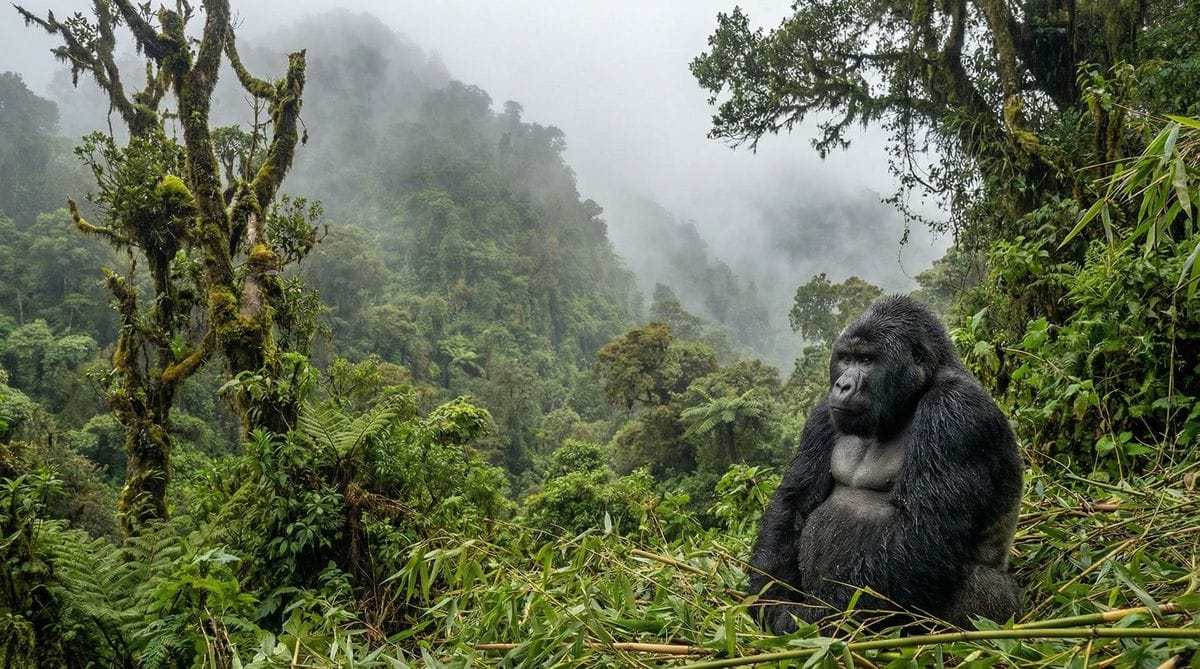
There are few wildlife experiences that can truly be described as "spiritual," but staring into the eyes of a mountain gorilla is one of them. It is a moment of connection that transcends species, a recognition of a shared lineage that goes back millions of years. Rwanda, the "Land of a Thousand Hills," is one of the premier destinations for this encounter. Volcanoes National Park, made famous by Dian Fossey, offers a safe, accessible, and profoundly moving opportunity to visit these gentle giants in their natural habitat.
The day begins early at the park headquarters in Kinigi. As the mist clings to the peaks of the Virunga Volcanoes, you are assigned to a specific gorilla family and introduced to your guides and trackers. The groups are small—maximum eight visitors per family—to minimize disturbance and the risk of disease transmission.
The trek itself is part of the adventure. Depending on where your family is located, the hike can take anywhere from 30 minutes to 4 hours. You walk through local farmland before entering the dense bamboo forests and rainforests of the park. The terrain can be steep, muddy, and challenging, but the anticipation keeps you moving. The guides are in constant radio contact with the advance trackers who have been following the gorillas since dawn.
Then, the radio crackles: "They are here." You leave your bags and walking sticks behind and move forward quietly. Suddenly, the bush parts, and there they are. A massive silverback might be stripping bark from a tree, a female nursing an infant, or juveniles tumbling over each other in play. The sheer size of the silverback—up to 200kg—is awe-inspiring, yet his demeanor is often one of quiet contemplation.
You are allowed exactly one hour with the gorillas. It is a strict rule designed to reduce stress on the animals. In that hour, time seems to warp. You are mesmerized by their human-like gestures—the way they use their hands, their facial expressions, the deep grunts of communication. You are not watching them from a vehicle; you are standing in their living room, often just a few meters away. They may glance at you with mild curiosity or ignore you completely, accepting your presence as a harmless curiosity. It is a privilege that leaves many visitors in tears.
Gorilla trekking is a high-value, low-impact tourism model. A permit in Rwanda currently costs $1,500 per person. This high price is a crucial conservation tool; a portion of the revenue goes directly to protecting the park and supporting the surrounding communities. This economic incentive has turned poachers into protectors and seen the mountain gorilla population rise from the brink of extinction to over 1,000 individuals today.
Permits are limited and sell out months in advance, especially for the dry seasons (June-September and December-February). Booking 6-12 months ahead is essential. You must be at least 15 years old to trek, and if you have a cold or flu, you will not be allowed to visit, as gorillas are highly susceptible to human respiratory diseases.