
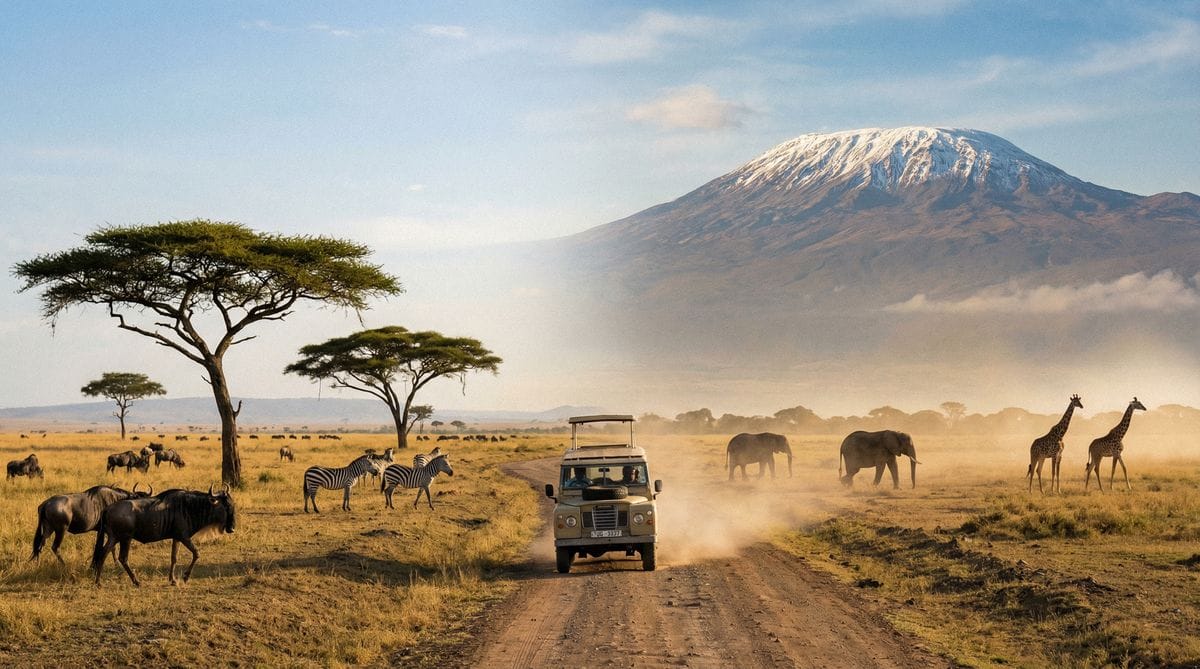
It is the most common dilemma for first-time safari planners: Kenya or Tanzania? Both countries are safari heavyweights, offering world-class wildlife, stunning landscapes, and rich cultures. They share the same coastline, the same tribes (Maasai), and even the same ecosystem (the Serengeti-Mara). Yet, they have distinct personalities. Choosing between them isn't about which is "better," but which is better for you.
Kenya is where the modern safari industry began. It is generally more compact, with a well-developed tourism infrastructure that makes it easier and often more affordable to get around.
* Pros:
* Accessibility: Nairobi is a major regional hub with many direct international flights. Transfers to parks are short and easy, often involving quick flights from Wilson Airport.
* Density: The Maasai Mara packs an incredible amount of wildlife into a relatively small area. You can see the Big Five in a single day here.
* Variety: Beyond the Mara, Kenya offers diverse landscapes like the arid Samburu in the north, the flamingo-filled lakes of the Rift Valley, and the pristine beaches of Diani.
* Conservancies: Kenya pioneered the private conservancy model. Staying in a conservancy bordering the Mara allows for night drives, walking safaris, and off-road driving—activities not permitted in the national reserve.
* Cons:
* Crowds: The Mara can get very busy in peak season (July-October), with multiple vehicles sometimes crowding a sighting.
* Traffic: Nairobi traffic is legendary and can eat into your time if not managed well.
Tanzania is vast. It feels wilder, bigger, and more untamed. It is home to some of the most famous natural landmarks on the continent.
* Pros:
* Scale: The Serengeti is nearly ten times the size of the Maasai Mara. The sense of space is overwhelming. You can drive for hours without seeing another vehicle.
* Icons: It hosts the Ngorongoro Crater (a natural wonder), Mount Kilimanjaro (Africa's highest peak), and Zanzibar (the spice island).
* The Migration: The Great Migration spends about 9-10 months of the year in Tanzania, making it the best place to see the herds for the majority of the year (calving in Jan-Mar, rut in May-Jun).
* Wilderness: The Southern Circuit (Ruaha, Selous) offers a raw, remote safari experience that feels like stepping back in time.
* Cons:
* Cost: Tanzania is generally more expensive. Park fees are higher, and the distances require more flying or long drives, adding to the cost.
* Travel Time: The distances are huge. Getting from one park to another can take a full day of driving or expensive flights.
If you have limited time (e.g., 5-7 days) or are traveling with young children, Kenya is often the better choice due to its ease of logistics and high wildlife density.
If you have more time (10+ days), a higher budget, and want to experience vast, epic wildernesses and specific events like the calving season, Tanzania is hard to beat.
Ideally? Do both. A combined itinerary that crosses the border at Isebania allows you to see the best of the Mara and the Serengeti, giving you the complete picture of this incredible ecosystem.