
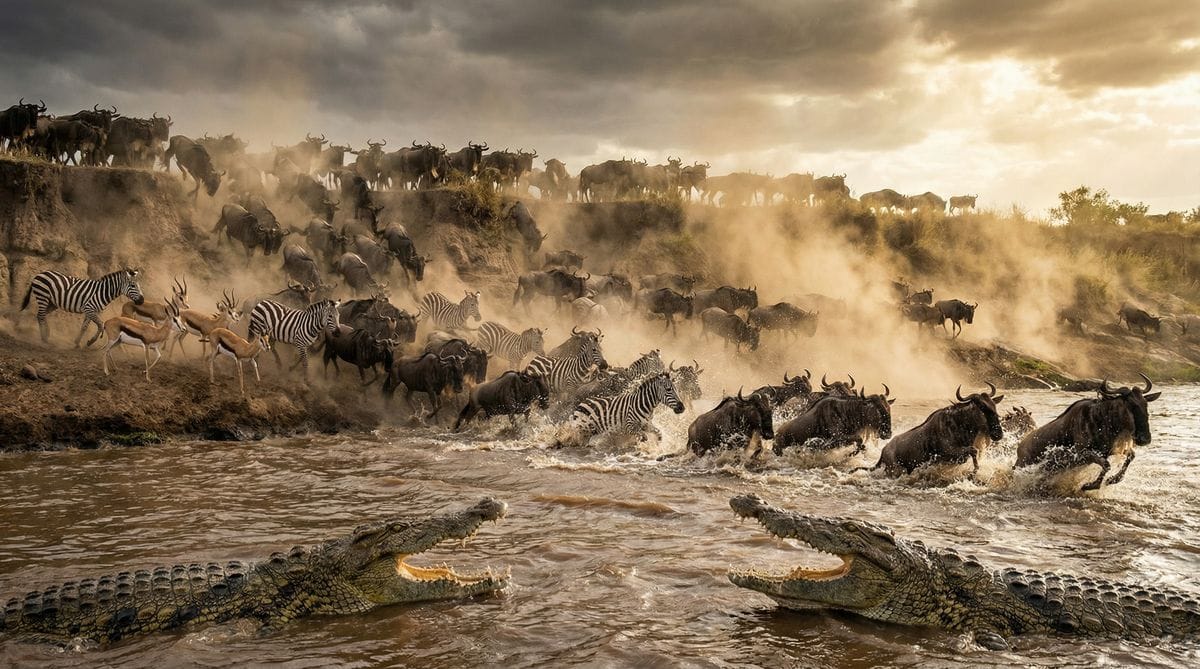
Imagine standing on the banks of the Mara River. The air is thick with dust and the guttural grunts of thousands of animals. Below, the water churns with the movement of massive crocodiles, lying in wait. On the opposite bank, a sea of wildebeest gathers, their anxiety palpable. Then, one brave soul takes the leap, and chaos erupts. This is the Great Migration, often dubbed the "World Cup of Wildlife," and it is a sight that defies description.
The Great Migration is an endless, circular journey of over two million wildebeest, accompanied by hundreds of thousands of zebras and gazelles. Driven by ancient instincts and the smell of rain, they traverse the Serengeti-Mara ecosystem in search of fresh grazing. It is not a single event but a year-round cycle of life, death, and renewal.
* The Numbers: Over 1.5 million wildebeest, 200,000 zebras, and 350,000 gazelles.
* The Distance: A round trip of approximately 1,800 miles (2,900 km).
* The Predators: They are followed closely by lions, leopards, cheetahs, hyenas, and wild dogs, ensuring that only the strongest survive.
Understanding the migration cycle is key to planning your safari. The herds are constantly on the move, so "timing is everything."
1. The Calving Season (January - March): The herds congregate in the short-grass plains of the southern Serengeti and Ngorongoro Conservation Area. In a synchronized birthing event, over 8,000 calves are born daily. It is a time of plenty, but also a time of intense predator action as big cats target the vulnerable young.
2. The Rut and Trek North (April - June): As the long rains arrive, the herds begin their trek north through the central Serengeti (Seronera) and the Western Corridor. This is the mating season, or "rut," characterized by testosterone-fueled battles between males.
3. The River Crossings (July - October): This is the dramatic climax. The herds reach the northern Serengeti and the Maasai Mara in Kenya. To access the lush grasses, they must cross the crocodile-infested Grumeti and Mara Rivers. These crossings are the most sought-after safari experiences, offering heart-stopping drama.
4. The Return South (November - December): As the short rains begin in the south, the herds turn back, crossing the rivers once more to return to the calving grounds, completing the circle.
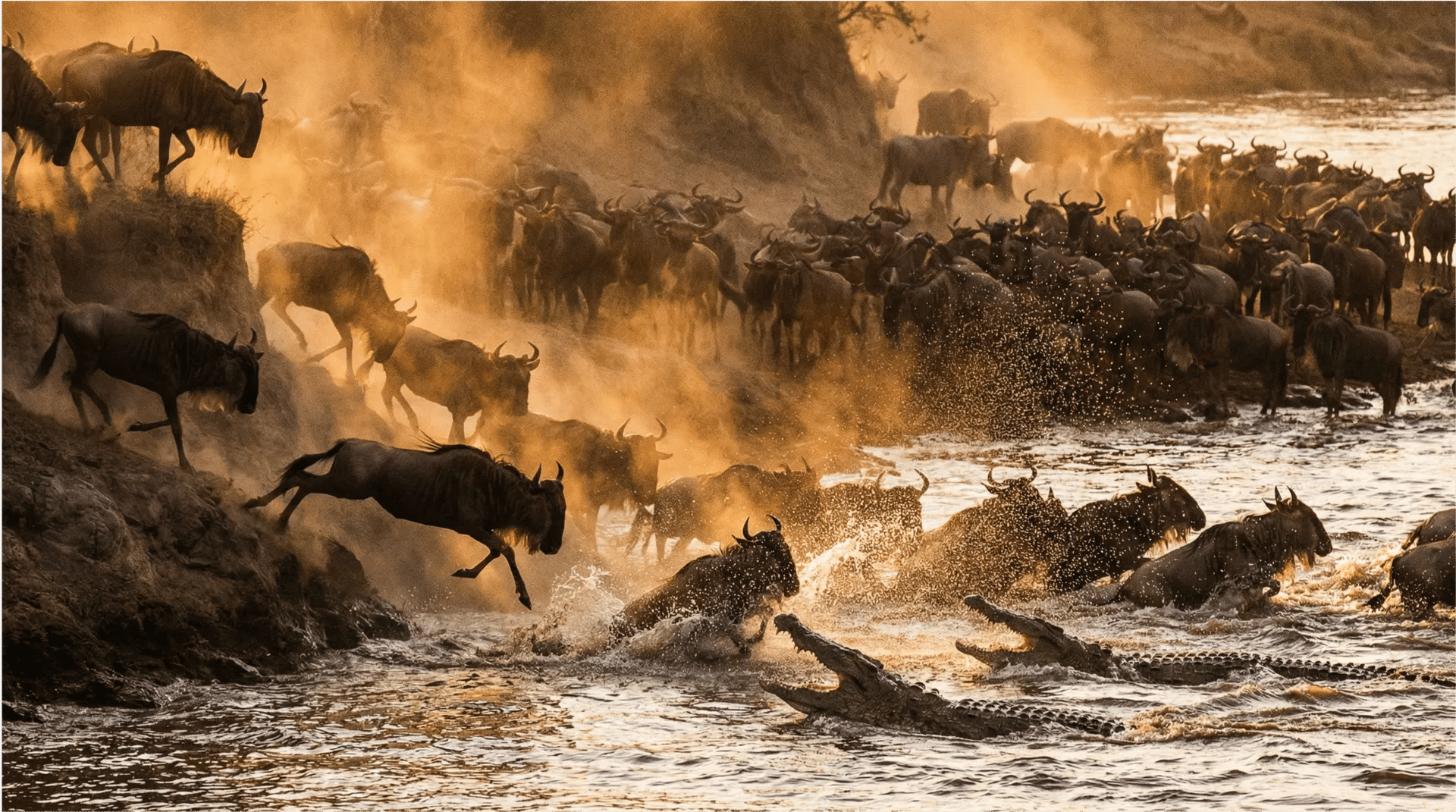
The Great Migration is more than just animals moving; it is a sensory overload. The sound of millions of hooves thundering across the plains, the sight of the endless black column stretching to the horizon, and the raw, unscripted drama of predator versus prey make it a humbling experience. It reminds us of the sheer scale and power of nature. Whether you watch it from a 4x4 vehicle or float above it in a hot air balloon at sunrise, it is a memory that will stay with you forever.